Airway & Sleep Support
The Importance of Airway & Sleep Support
Healthy breathing is the foundation of healthy sleep. When proper resting tongue posture and nasal breathing are compromised, the airway can narrow, disrupting sleep and triggering a chronic stress responses. Supporting the airway through targeted myofunctional therapy strengthens the oral and facial muscles and not only improves sleep quality, but also boosts energy, cognitive function, and cardiovascular health during the day.

Treatment Can Help With Symptoms Such As:
Mouth Breathing
Inhaling and exhaling through the mouth instead of the nose, can cause problems like dental decay, sleep issues, and changes to facial structure.
Snoring
Though common, severe and disruptive snoring can be a warning sign of obstructive sleep apnea, where breathing routinely stops and starts.
Disordered Breathing
Harmful sleep breathing habits includes conditions where your breathing can repeatedly stop, slow down, and/or become obstructed during sleep.
Restless Sleep
Restless sleep caused by orofacial airway issues leads to daily physical, cognitive, and emotional struggles due to fragmented rest and slightly lower oxygen levels.
Fatigue
Fatigue caused by airway issues often presents itself as chronic exhaustion, poor concentration, and physical strain from improper breathing and muscle compensation.
Poor Oral Resting Posture
Identifying poor oral resting posture involves a professional evaluation to observe symptoms such as open mouth breathing, forward head posture, and low tongue posture.
Poor Tongue Posture
Poor tongue posture leads to a habitual low and forward resting position that disrupts daily oral function, breathing, and facial stability.

What Does Airway & Sleep Support Look Like?
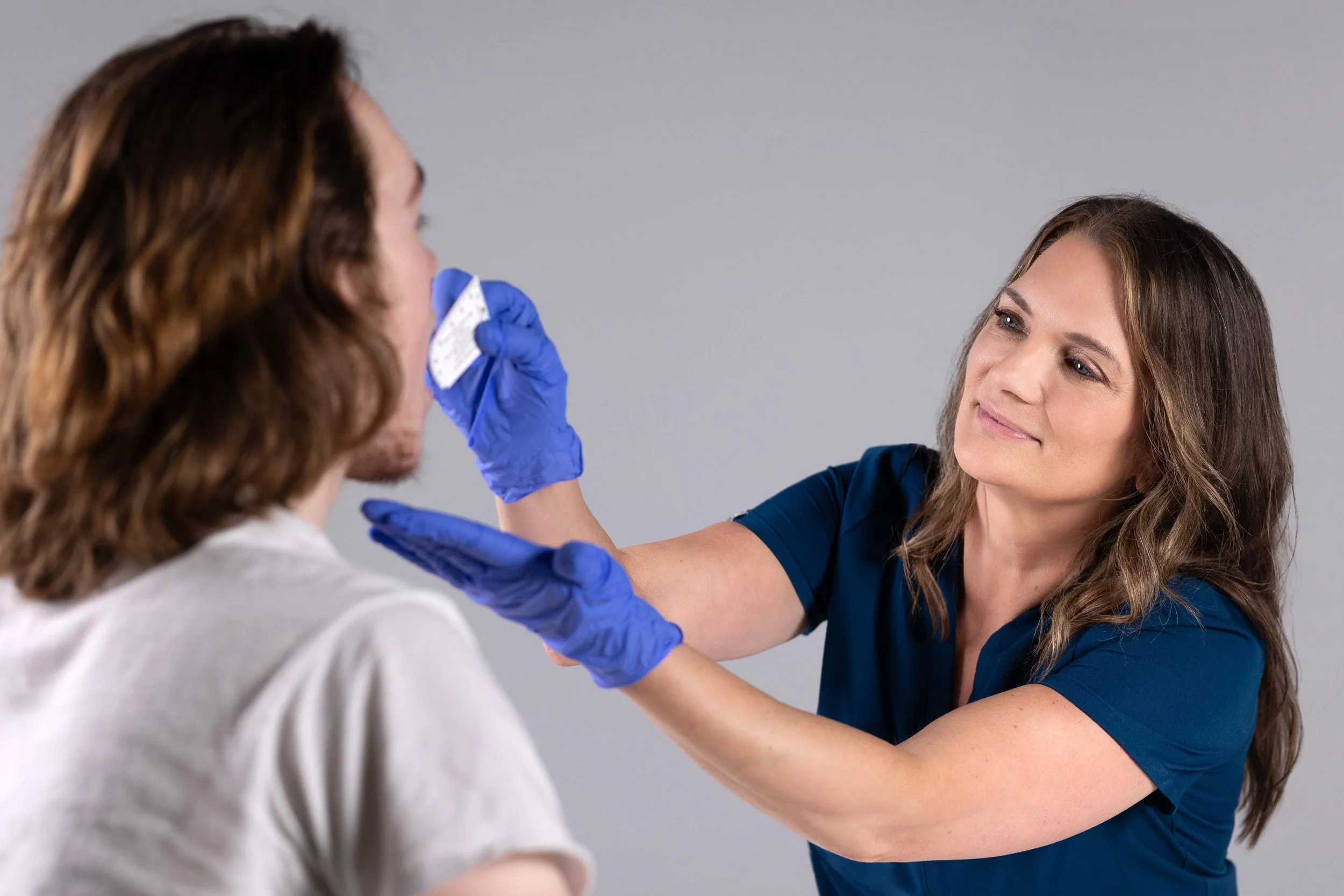
Treatment starts with an airway-focused evaluation to identify patterns that may include symptoms like mouth breathing, snoring, restless sleep, sleep-disordered breathing, fatigue, poor tongue posture, and poor oral resting posture. Then, our experts will discuss treatment options and personalize your care to your specific issues and lifestyle. Targeted exercises may be given to train the facial muscles and tongue. When appropriate, collaboration with airway-focused dentists, orthodontists, ENTs, sleep physicians, and other healthcare providers is recommended.

Your Steps To Better Health:
1
Receive an evaluation. Experts at East Texas Orofacial Myology provide you with a comprehensive evaluation to identify dysfunctional patterns such as mouth breathing, poor tongue resting posture, snoring, and sleep-disordered breathing. We then discuss personalized treatment options tailored to your specific symptoms, health needs, and daily lifestyle.
2
Follow your treatment plan. Therapy utilizes targeted exercises to strengthen and train the muscles of the mouth, tongue, and throat to encourage consistent nasal breathing and an open airway. When appropriate, we collaborate directly with airway-focused dentists, orthodontists, ENTs, and sleep physicians to ensure a fully integrated approach.
3
Get long term relief! Guided practice reinforces proper oral resting posture—keeping the tongue resting against the palate and the lips closed during sleep. This structural support prevents airway collapse, eliminating sleep disruptions to boost daytime energy, cognitive focus, and long-term cardiovascular health.
•
•
•
•
• • • •
Not Sure Where To Start?
We Can Help Make Airway & Sleep Support Easy For You!
Finding reliable care for airway and sleeping problems can be frustrating, especially when you don’t know where to start, but we help make it simple!
Whether you suffered with symptoms all your life or are a concerned parent looking for compassionate care for your little one, our clinic helps make your experience easy and effective.
At East Texas Orofacial Myology, we prioritize the overall health and happiness of our patients, big and small. Let us know your concerns and we’ll walk you through a professional evaluation and comprehensive understanding of your treatment options. You can get an in-person or telehealth appointment through our contact form or calling our office at 903-504-8586.