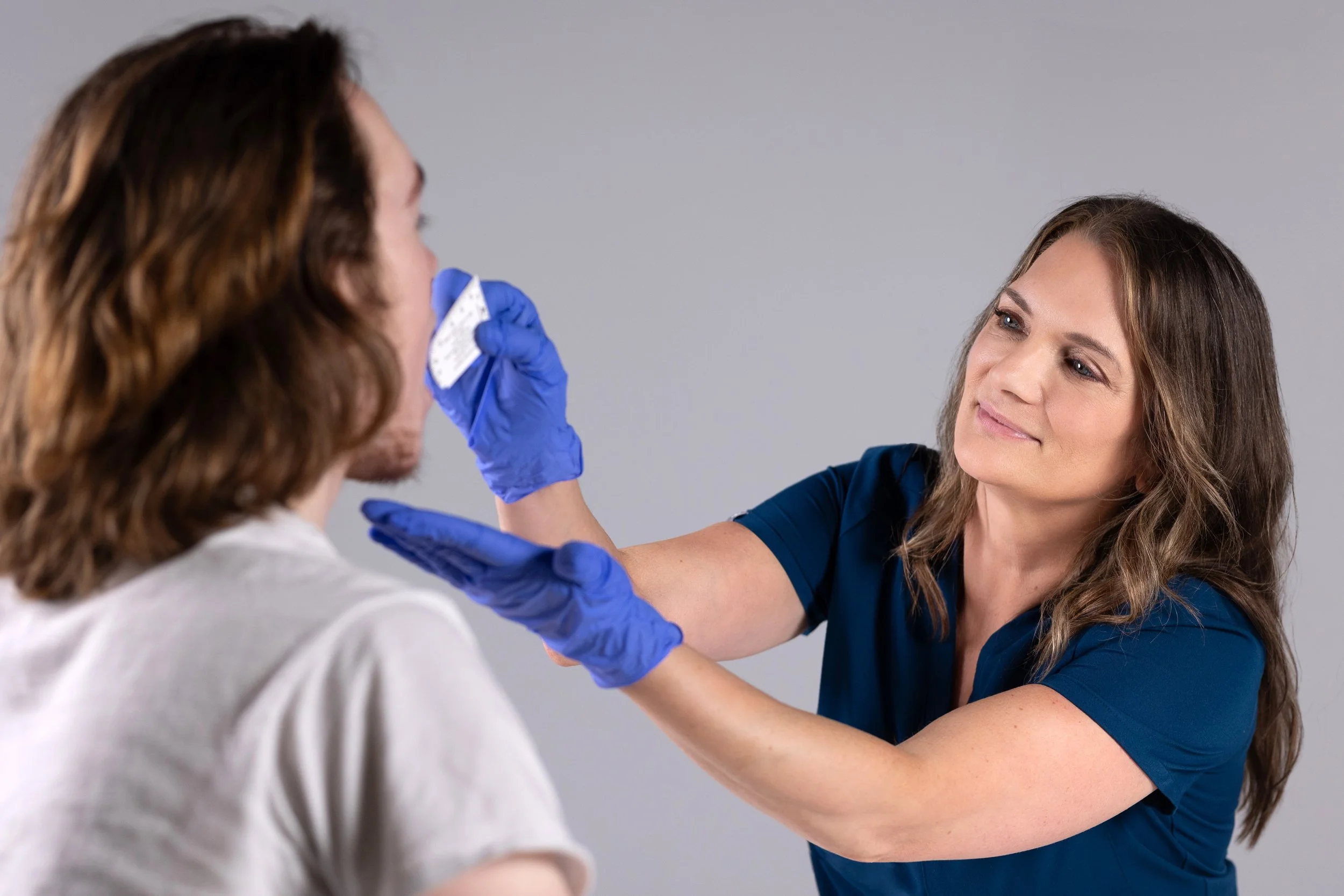
Tongue Tie Evaluation & Rehab
What Is Tongue Tie Evaluation & Functional Rehabilitation?
Restricted tongue mobility affects breathing, swallowing, speech, jaw function, sleep, posture, and the overall quality of life. Our treatments includes a comprehensive tongue mobility evaluation, functional assessment, pre-operative preparation, post-operative rehabilitation, scar tissue management, and mobility exercises to restore proper mobility and function, collaboration with your dentist, physician, or surgical provider helps ensure the best possible outcome.

Treatment Services Include:
Functional Assessment
A functional assessment for a tongue-tie is important to complete. Just a visual assessment alone does not reveal how well the tongue actually works.
Pre-operative Preparation
Pre-release or pre-surgical therapy is vital in treating tongue tie. Surgery only frees restricted tissue, but therapy is needed to retrain the tongue and proper movement and function.
Scar Tissue Management
Scar tissue management is important after a tongue tie surgery, to prevent the tissue from reattaching, aiming to restore full tongue mobility.
Post Operative Rehabilitation
Rehabilitation is essential to retrain the brain and muscles in coordination as it breaks habits, prevents reattachment, and ensures long-term success.
Mobility Exercises
Exercises focusing on tongue extension, suction, elevation, laterization and oral control are critical to prevent reattachment, relieve tension, and retrain the oral muscles.
Tongue Mobility Evaluation
A comprehensive tongue mobility screening assesses how the tongue functions, helping identify restrictions that affect breathing, feeding, and speech.

Why is Tongue Tie therapy important?
Restricted tongue movement is frustrating, impairing daily functions like swallowing, speech, and even airway development. East Texas Orofacial Myology offers a comprehensive assessment to measure mobility and muscle patterns. Therapy focuses on targeted pre- and post-frenectomy exercises to condition the tongue muscles. This process prevents tissue reattachment after a release, and retrains proper resting posture against the palate as well as functional patterns. This structural and behavioral approach ensures that the tongue achieves a full range of motion for healthy, long-term oral function.

Your Child’s Treatment Steps:
1
Receive a functional evaluation. East Texas Orofacial Myology begins with a comprehensive assessment to measure tongue mobility, speech, swallowing, and muscle patterns affecting the patient’s breathing and posture. If a release is recommended, targeted pre-operative exercises are given to condition the tongue muscles and establish baseline movement.
2
Retrain the brain! Post-procedure rehabilitation and muscle retraining aligns the newly released tongue with the brain’s muscle memory for easier function. Therapy focuses on gentle mobility exercises to prevent reattachment. Guided activities retrain the tongue to maintain a proper resting posture against the palate, ensuring full range of motion and long-term oral function.
3
Get expert advice on your surgical decision. Our team collaborates closely with your dentist, physician, and/or surgical provider to determine if a frenectomy is necessary or if non-surgical therapy alone will suffice. This coordinated approach gives you a complete understanding of your treatment plan.
•
•
•
•
• • • •
Not Sure Where To Start?
We Can Help Make Your Tongue Tie Evaluation & Rehab Easy!
Finding reliable care for tongue tie can be frustrating, especially when you don’t know where to start, but we help make it simple!
Whether you suffered with symptoms all your life or are a concerned parent looking for compassionate care for your little one, our clinic helps make your experience easy and effective.
At East Texas Orofacial Myology, we prioritize the overall health and happiness of our patients, big and small. Let us know your concerns and we’ll walk you through a professional evaluation and comprehensive understanding of your treatment options. You can get an in-person or telehealth appointment through our contact form or calling our office at 903-504-8586.