TMJ & Jaw Muscle Therapy
The Importance of TMJ Pain Relief & Jaw Muscle Therapy
Many jaw symptoms originate from dysfunctional muscle patterns rather than the joint itself. At East Texas Orofacial Myology, our treatment focuses on improving muscular function associated with common problems such as jaw pain, facial pain, muscle tension, clicking or popping, limited opening, clenching, bruxism, jaw fatigue, and headaches related to muscle dysfunction.

Treatment Can Help With Symptoms Such As:
Jaw/Facial Pain
Jaw and facial pain from temporomandibular joint (TMJ) and jaw issues typically feels like a dull, aching soreness, or a tight, fatigued sensation in the cheeks, temples, and jaw.
Headaches
Headaches caused by TMJ and jaw muscle issues typically feature a dull ache or steady pressure around the temples that worsens with chewing, talking, or yawning.
Muscle Tension
Muscle tension may feel like persistent tightness, aching, or fatigue in the facial area. This causes pain, disrupted sleep, limited eating habits, and muscle fatigue.
Clicking/Popping
Clicking/popping in the jaw happens when the small cartilage disc inside your TMJ slips out of place and snaps back as you open or close your mouth.
Limited Opening
Limited jaw opening can stem from severe tension and spasms in the muscles. A mouth opening of less than 35 to 40 millimeters is considered “limited”.
Clenching
Chronic jaw clenching is mainly caused by physical, psychological, and lifestyle factors. Clenching strains the jaw muscles, placing heavy pressure on joints, and leading to dental wear.
Bruxism
Bruxism is repetitive jaw activity like clenching, grinding, and/or thrusting of the lower jaw. Bruxism overworks the muscles and places heavy stress on the temporomandibular joints.
Jaw Fatigue
Jaw fatigue is a subjective feeling of weakness, heaviness, or tiredness in the chewing muscles that happens even after minimal physical exertion like talking or eating.

What is the goal of TMJ & Jaw muscle therapy?
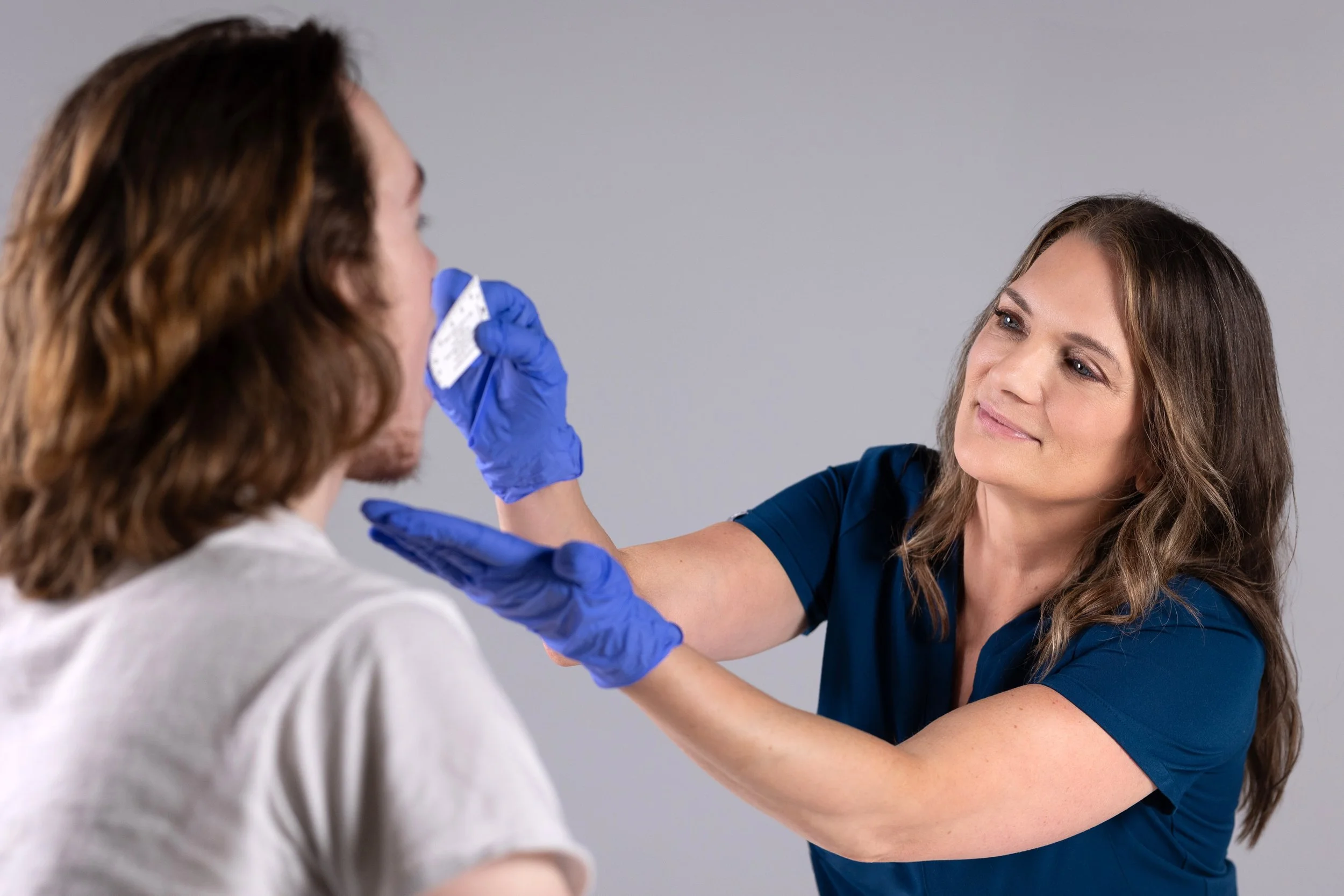
Temporomandibular joint (TMJ) and jaw muscle therapy is targeted towards eliminating the muscle imbalances and poor postures that stress the TMJ. East Texas Orofacial Myology works to relieve our patient’s daily problems caused by the TMJ and jaw muscle strain by retraining the muscles of the tongue, lips, and face. Our goal is to improve the patient’s comfort, stability, and efficiency in movement.

Your Steps To Better Health:
1
Receive an evaluation. Our experts at East Texas Orofacial Myology provide our patients with a professional evaluation to assess muscle imbalances, clenching habits, and postural problems stressing the TMJ. We will put together a personalized care plan and discuss treatment options to address jaw pain, headaches, clicking, and limited mobility.
2
Follow your treatment plan. Therapy targets dysfunctional muscle patterns by retraining the muscles of the tongue, lips, and face to relieve daily strain on the TMJ. Controlled exercises correct poor resting posture and eliminate clenching or bruxism behaviors to restore balance and muscle symmetry.
3
Get the relief you deserve! Focused exercises improve comfort, stability, and movement efficiency while guiding the jaw into natural, strain-free alignment during everyday functions like chewing and speaking. Continued practice establishes long-term muscle memory to safeguard the joint and deliver lasting relief for both children and adults.
•
•
•
•
• • • •
Not Sure Where To Start?
We Can Help Make Your TMJ & Jaw Muscle Therapy Easy!
Finding reliable care for TMJ issues, jaw pain and headaches can be frustrating, especially when you don’t know where to start, but we help make it simple!
Whether you suffered with symptoms all your life or are a concerned parent looking for compassionate care for your little one, our clinic helps make your experience easy and effective.
At East Texas Orofacial Myology, we prioritize the overall health and happiness of our patients, big and small. Let us know your concerns and we’ll walk you through a professional evaluation and comprehensive understanding of your treatment options. You can get an in-person or telehealth appointment through our contact form or calling our office at 903-504-8586.